

Two relocation quotes are not comparable just because each has a headline price.
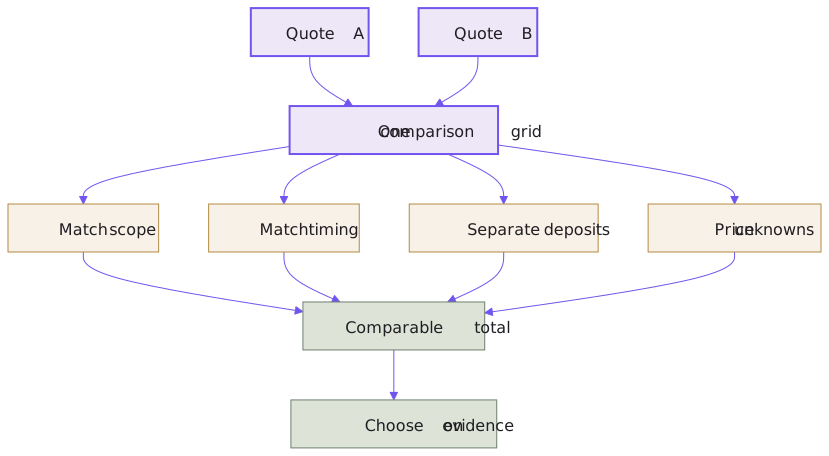
First put both quotes on the same basis. Record what is included, which charges are separately payable, which optional items you would actually need, the cash tied up in deposits, future renewals and every amount that remains unknown. Do not enter zero where a quote is silent: zero means no charge; unknown means you still cannot calculate a reliable total.
Australian departure planning and overseas establishment are separate but connected workstreams. They can involve personal circumstances, business and assets, destination setup, responsibilities and handoffs. A relocation package may cover only part of that wider plan.
This article is general information, not legal, tax, financial or migration advice. The work required, its cost and its sequence depend on your circumstances. Check decisions about your position with appropriately qualified advisers.
At a glance
Key takeaways
- Confirm that every quote covers the same stage and work before comparing headline totals.
- Mark each item as included, optional, excluded or unpriced and unclear so missing costs remain visible.
- Normalise currencies, tax treatment, payment timing, renewals, deposits and refund conditions before calculating totals.
- Assess provider competence separately because the cheapest normalised quote is not automatically the most suitable provider.
First check whether the quotes cover the same stage
The Australian Exit Guide distinguishes designing the exit, establishing the new base, carrying out departure steps and maintaining the position and its evidence after arrival.
That distinction belongs in a cost comparison. A price for implementing a chosen setup cannot be read as the price of deciding which setup is appropriate.
Before comparing totals, identify whether each written offer covers:
- Planning: investigating facts, comparing options and identifying questions that need specialist advice.
- Implementation: carrying out specified actions once the relevant decisions have been made.
- Ongoing work: defined tasks after establishment, over a stated period.
These are comparison headings, not representations of Project Get Out’s fees or anyone’s package inclusions. A quote may cover one stage, part of a stage or several stages. Ask the provider to state which.
If one offer includes planning and another assumes a completed plan, do not compare them as interchangeable purchases. Identify the missing stage and obtain its scope or price if your circumstances require it. Keep a material unpriced amount marked as unknown.
Then align the currency, preparation date, validity period, tax inclusion, government and third-party charges, applicant numbers and any assumptions about the proposed activity or structure. Distinguish fixed figures from estimates and variable amounts. Where those bases differ, ask for written clarification before drawing a price conclusion.
Use four statuses, not two
An included-versus-excluded checklist is too blunt. Give every line one of four statuses:
- Included: The quoted headline price covers the defined work or charge.
- Optional: The item can be added, but you need to decide whether your plan requires it and obtain its price.
- Excluded: The quote expressly leaves the item outside the package. Record any separate amount if known.
- Not priced or unclear: The quote does not provide enough information to determine the amount or scope.
Keep “excluded” and “not priced” separate. An excluded item may have a known cost elsewhere. An unpriced item has no reliable amount yet. Neither should automatically appear as zero in your comparison.
Words such as “support”, “assistance” and “available” also need clarification. Ask what action will be performed, what the stated amount covers and what would trigger another charge.
Worked hypothetical comparison
The table below is explicitly hypothetical. It does not describe any supplier or standard market package.
| Work item | Hypothetical Quote A | Hypothetical Quote B | Normalisation needed |
|---|---|---|---|
| Initial entity setup | Included | Included | Confirm the same registrations, activities and assumptions are covered |
| Residence-related application | Optional; amount stated separately | Included | Add A’s option if it is needed; confirm both cover the same stages and number of applicants |
| Government or third-party charges | Not itemised | Some stated as included | Obtain an itemised list from both; leave unresolved amounts as unknown |
| Australian departure advice | Not priced or unclear | Excluded | Do not enter zero; determine whether it is needed and obtain a separate scope if appropriate |
| Banking assistance | Included as “assistance” | Optional; amount not stated | Define the work and add B’s amount only if the option is needed |
| Deposit | Required; refund terms unclear | Not mentioned | Show upfront cash separately; clarify whether B requires one |
| Renewal charges | Mentioned but not priced | Initial period described; later cost unclear | Record both future amounts as unknown until clarified |
| Family applications | Excluded | Optional | Add only for the applicants who need them, using confirmed amounts |
| Ongoing administration | Not priced or unclear | Limited period included | Compare the same time horizon and obtain later recurring amounts |
This table does not establish that one quote is better. It exposes the questions that must be answered before their totals mean the same thing.
Reconcile costs, cash timing and unknown amounts
For each quote, build the initial cost from the headline package, separately payable charges, required options and other relevant non-refundable costs. Count each item once and keep estimates separate from confirmed amounts.
Then record four results:
| Result | What belongs in it |
|---|---|
| Known initial cost | Quantified non-refundable amounts for the initial work, whether payable now or later |
| Known cash due upfront | Only charges and deposits payable at the start; show refundable deposits separately |
| Known recurring cost | Renewals and recurring charges over the same chosen comparison period |
| Unknown amounts | Required or potentially required items without a reliable price |
An initial cost is not necessarily payable immediately. Keep later instalments out of the upfront-cash figure. A potentially refundable deposit still needs funding when due, so record its refund conditions and timing rather than subtracting it from the cash needed at the start.
Use the same currency, date basis, tax inclusion and period for both quotes. Ask for written clarification where they differ. If a material required amount remains unknown, the comparison is incomplete; show the known components without presenting their sum as a full total.
This exercise compares written costs and inclusions. Assess the provider’s competence and suitability separately.
A one-page reconciliation worksheet
Use one row for every work item and complete these fields:
| Field | Entry to record |
|---|---|
| Status | Included, optional, excluded, or not priced/unclear |
| Required for your plan? | Yes, no, or not yet determined |
| Amount | Confirmed figure, estimate clearly labelled, or unknown |
| Payment timing | Upfront, later milestone, renewal, or uncertain |
| Cost character | Non-refundable, refundable subject to conditions, variable, or third-party |
| Assumption | Applicant, activity, structure, documents or earlier decision relied upon |
| Clarification needed | Exact question to send to the provider |
Total only confirmed amounts that belong in the same category, currency, date basis, tax basis and time period. Keep estimates visible rather than blending them into fixed figures.
Normalising the written scope does not establish provider competence or suitability; assess that separately.
The Australian Exit Guide is an educational resource for entrepreneurs researching leaving Australia or restructuring. Australian Exit Guide It may help you understand the foundations before you compare implementation quotes. Questions about your own tax, legal, financial or migration position should go to an appropriately qualified adviser.
Important: This article is general information only and does not constitute legal, tax, financial, investment or immigration advice. Rules and programmes can change. Obtain advice from appropriately qualified professionals who understand your facts and the relevant jurisdictions before acting.